Order restricting birthright citizenship
Editorial record through October 30, 2026. Later developments are not reflected here.
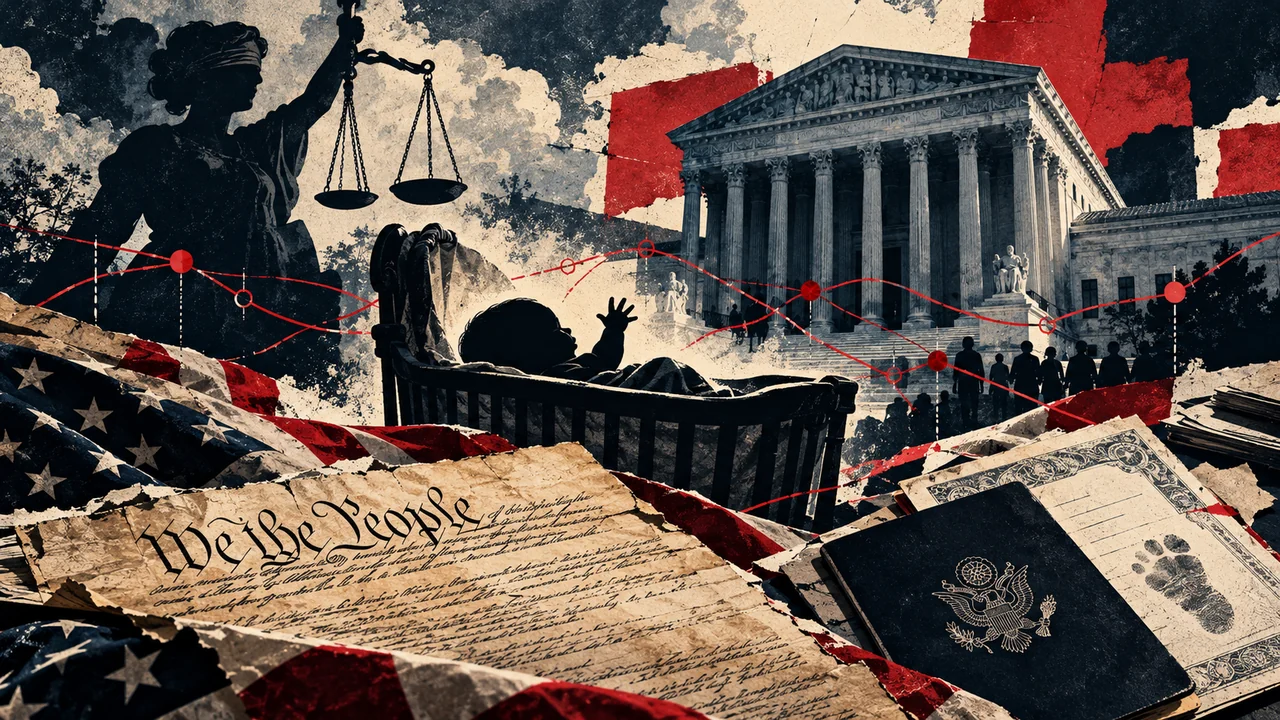
Remember when?
President Trump signed Executive Order 14160 on January 20, 2025, seeking to deny recognition of birthright citizenship to certain children born in the United States based on parental immigration status. In Trump v. Barbara on June 30, 2026, the Supreme Court held the order unconstitutional under the Fourteenth Amendment; a justice concurring in the judgment would have rested on federal statute instead.
What happened and why it drew scrutiny
The order sought to change how federal agencies recognized citizenship at birth for children of parents who were in the country unlawfully or on temporary permission. That would have affected official citizenship documentation despite longstanding recognition of citizenship for almost everyone born on U.S. soil. Challengers argued that a president could not narrow the Fourteenth Amendment by directing agencies to adopt a new interpretation. In June 2026, the Supreme Court ruled on the merits against the order. Five justices in the controlling constitutional majority held the Citizenship Clause protected the affected children; Justice Kavanaugh agreed with the result on statutory grounds rather than joining that constitutional reasoning.
Why it matters
Attempting to narrow a constitutional guarantee by executive order raised questions about limits on presidential power and the legal status of U.S.-born children.
Administration response and important qualifications
The administration advanced a narrower interpretation of “subject to the jurisdiction thereof.” The majority rejected that argument as inconsistent with the Citizenship Clause and its historical meaning; not every justice in the judgment majority agreed on the constitutional rationale.
Start with the evidence
- Supreme Court: Trump v. Barbara (June 30, 2026) ↗
Majority held citizenship order unconstitutional; a concurrence agreed in judgment under federal statute.
Additional records and qualifications
The Supreme Court held that children born in the United States to parents unlawfully or temporarily present are citizens at birth under the Fourteenth Amendment. This was a merits decision, not merely an interim procedural ruling. The opinion includes differing judicial rationales; the majority holding should not be attributed to every justice.
Original document: Trump v. Barbara (June 30, 2026)
Trump v. CASA (June 27, 2025) addressed the permissible scope of universal injunctions and expressly did not resolve whether the birthright-citizenship executive order was constitutional. Trump v. Barbara (June 30, 2026) subsequently decided the constitutional merits and held that the covered U.S.-born children are citizens under the Fourteenth Amendment. These are distinct rulings and should not be conflated.
Trump v. CASA (June 27, 2025), Supreme Court slip opinion
Trump v. Barbara (June 30, 2026), Supreme Court slip opinion
The Supreme Court docket for Trump v. CASA, No. 24A884, records the June 27, 2025 disposition of applications for partial stays. That proceeding concerned the scope of universal preliminary injunctions. It should not be cited as a decision that Executive Order 14160 was constitutional; the later merits decision in Trump v. Barbara is a separate case.
Original Supreme Court docket — Trump v. CASA