Federalization of California’s National Guard during Los Angeles protests
Editorial record through October 30, 2026. Later developments are not reflected here.
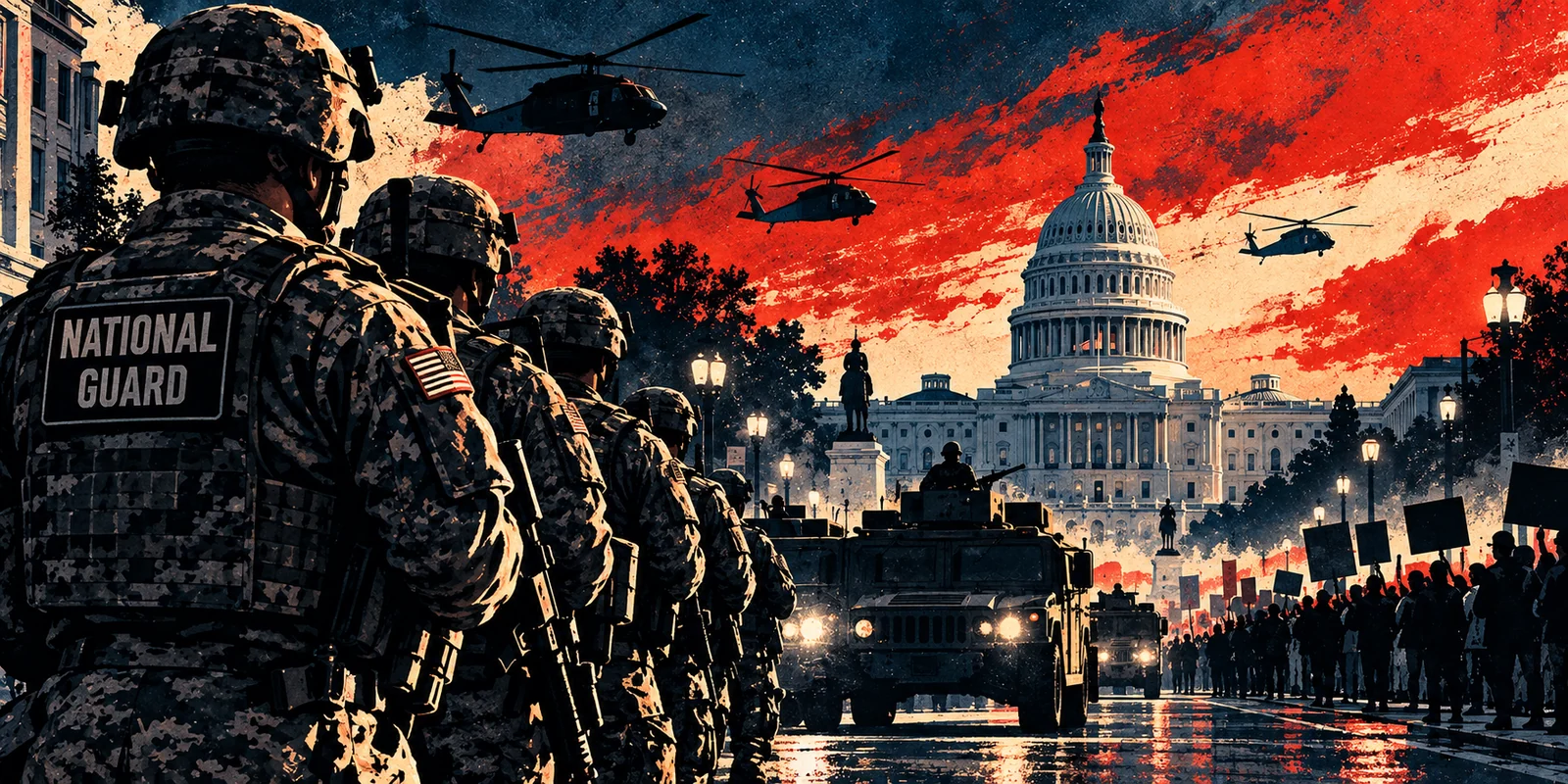
Remember when?
In June 2025 the administration federalized California National Guard members during immigration-enforcement protests in Los Angeles, prompting litigation by Governor Gavin Newsom and the state. On October 23, 2026, the Ninth Circuit affirmed a preliminary injunction requiring the federal government to return control of the Guard to California. This interim appellate ruling addressed the particular Los Angeles deployment and did not resolve all possible federal deployment authorities.
Why it matters
Deploying military-organized forces in civilian settings risks blurring the line between military missions and ordinary policing.
The important questions include what mission troops were assigned, which level of government had command authority, and whether military personnel were drawn into activities ordinarily carried out by civilian police. Legal challenges to a particular deployment do not mean every domestic Guard deployment is improper.
Administration response and important qualifications
The administration argued troops were needed to protect federal personnel and property amid unrest. The judicial dispute concerned whether the statutory and constitutional prerequisites for federalizing the Guard had been satisfied, not whether the federal government can ever protect its facilities.
The October 23, 2026 Ninth Circuit opinion affirmed the preliminary injunction in Newsom v. Trump; the judges did not decide that federal authorities can never use National Guard units. The majority held that this particular federalization exceeded the authority Congress granted under 10 U.S.C. § 12406. See the official appellate record.
Start with the evidence
- Congressional Research Service: Posse Comitatus and domestic military operations (legal context) ↗
General legal background, not proof of each 2025–2026 deployment; separate deployments by city and date.
- Ninth Circuit opinion, Newsom v. Trump, October 23, 2026 ↗
Original federal appellate opinion; the relief was preliminary and case-specific.
Legal status and evidentiary limits
The contemporaneous recorded statements and/or court proceedings should be evaluated according to their actual scope. No criminal violation or final adjudication is implied unless supported by a cited final decision; remaining evidentiary and audiovisual checks are documented in the archive ledger.
Evidence and competing interpretations
Claim 1 — SUPPORTED_ACTION: The president invoked 10 U.S.C. § 12406 in June 2025 to federalize California National Guard troops for Los Angeles. The court's procedural history records an initial order concerning 4,000 members for 60 days. This describes the California deployment, not every deployment nationally.
Claim 2 — SUPPORTED_APPELLATE_HOLDING: On October 23, 2026, a divided Ninth Circuit panel affirmed a preliminary injunction against the initial federalization and deployment in Los Angeles and ordered control returned to the governor. The majority concluded the administration failed to establish the threshold conditions under § 12406(3). This was an appellate ruling on preliminary relief, not a final merits judgment after trial.
Claim 3 — SCOPE_LIMITATION: The Ninth Circuit opinion concerns the California National Guard and this invocation of § 12406. It does not categorically prohibit every federal National Guard deployment or decide the legality of all other deployments.
Claim 4 — EDITORIAL_ASSESSMENT: Concerns about using military-organized forces in civilian settings are an editorial civil-military policy assessment. The court's actual holding addressed the legal conditions for federalization; do not present the broader policy concern as a court finding.
Claim 5 — ATTRIBUTED_GOVERNMENT_RATIONALE: The administration argued that federalization was necessary to protect federal personnel and property amid protests and unrest. The court described that asserted justification but held the legal prerequisites had not been met on the record before it.
Claim 6 — SUPPORTED_LITIGATION_ISSUE: The dispute centered on statutory conditions and judicial review of presidential authority under 10 U.S.C. § 12406, with constitutional separation-of-powers implications. The appellate majority's preliminary-relief holding should not be confused with a universal constitutional prohibition.