Signal group chat about Yemen strikes
Editorial record through October 30, 2026. Later developments are not reflected here.
Remember when?
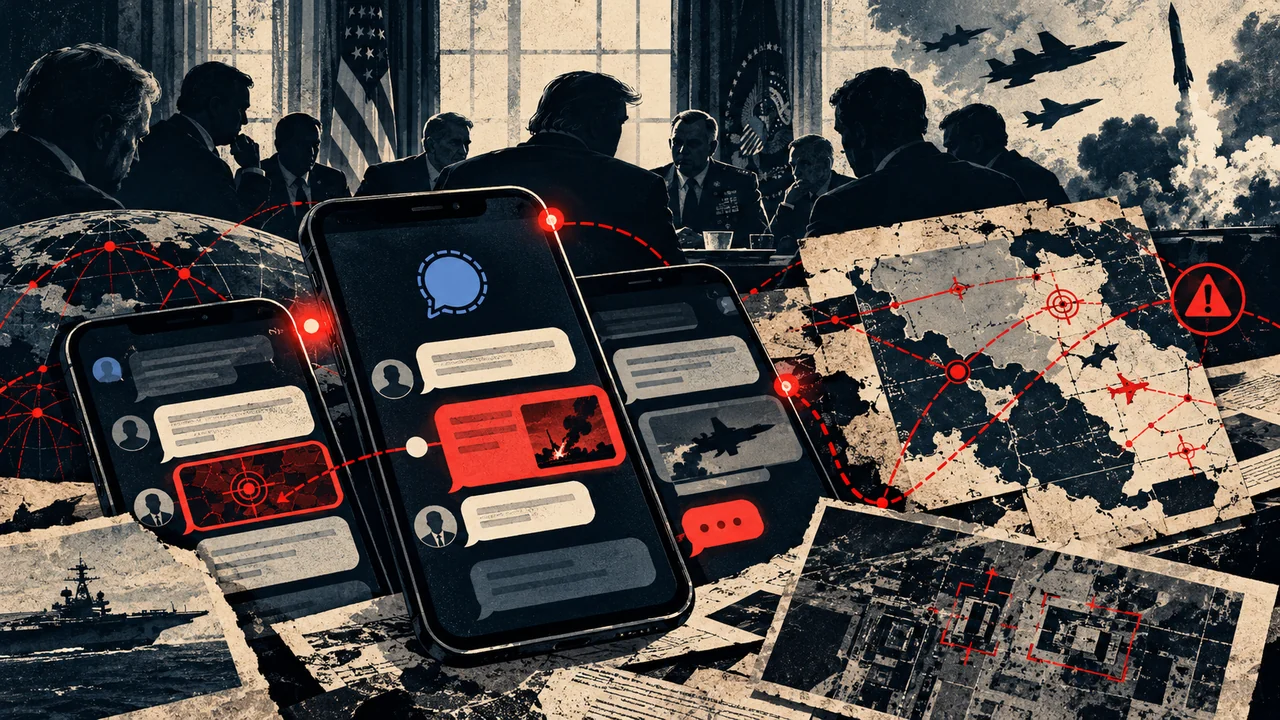
Senior national-security officials discussed planned U.S. strikes against Houthi targets in a Signal group that accidentally included The Atlantic editor Jeffrey Goldberg. The publication released messages documenting the operational discussion; officials disputed whether the shared information was classified.
Why it matters
The inclusion of an unauthorized journalist in a high-level operational discussion raises security, information-handling and governmental competence concerns even aside from any criminal classification determination.
The lapse is assessable on at least two separate grounds: the inadvertent inclusion of someone outside the intended group, and the sensitivity of the operational details shared. Neither point requires assuming that a criminal offense occurred or that every message had a formal classification marking.
Administration response and important qualifications
Administration officials acknowledged the mistaken addition, maintained the operation succeeded and disputed descriptions of the messages as classified war plans.
What the messaging incident exposed
In March 2025, a Signal group involving senior administration officials discussing planned strikes in Yemen included journalist Jeffrey Goldberg, who had been added inadvertently. Subsequent reporting and disclosures focused on the level of operational detail shared, the timing relative to military action and whether the discussion complied with government recordkeeping and information-security rules.
The administration disputed characterizations of the material as classified and emphasized that the operation succeeded. The central questions nevertheless extended beyond classification: whether sensitive operational plans should have been distributed on a commercial messaging service and why an unauthorized participant could receive them. Those questions require precise reference to the actual messages rather than assumptions about every detail's classification.
The messages and the Pentagon watchdog’s findings
In March 2025 a Signal group involving senior national-security officials discussed strikes against Houthi targets in Yemen. Journalist Jeffrey Goldberg was included inadvertently. Publication of the messages showed operational details shared shortly before the action, rather than merely broad policy discussion.
A Pentagon inspector general report made public in December 2025 found that Defense Secretary Pete Hegseth used an unapproved commercial messaging application to share sensitive operational information, putting service members at risk and violating department policy. The watchdog distinguished the security-handling violation from a definitive finding that the messages had remained classified; Hegseth asserted declassification authority and disputed that the material was classified. The case illustrates why a security-policy failure can be serious without a proven criminal classification offense.
Additional case-specific sources
- The Atlantic: published messages and chronology
- Defense Department inspector general: December 2025 investigation (primary report)
- Associated Press: December 2025 Pentagon inspector-general findings
Start with the evidence
- The Atlantic: published Signal messages and chronology ↗
Participant-published record; important to distinguish disclosure of operational details from an official determination of classification.